University hospital are community-based and patient-directed organizations that provide extensive, culturally proficient, top quality main healthcare services. University hospital also typically integrate access to pharmacy, mental health, substance usage disorder, and oral health services in locations where financial, geographical, or cultural barriers restrict access to budget-friendly health care services. Health centers deliver care to the Nation's most susceptible people and families, consisting of people experiencing homelessness, farming workers, homeowners of public housing, and the Country's veterans.
Offer services despite clients' ability to pay and charge for services on a sliding fee scale. Run under the direction of patient-majority governing boards of autonomous community-based companies. These include public and personal non-profit organizations and tribal and faith-based organizations. Develop systems of patient-centered and integrated care that react to the unique requirements of diverse medically underserved areas and populations.
University hospital gotten rid of geographic, cultural, linguistic, and other barriers to care by delivering collaborated and extensive primary and preventive services. This care lowers health variations by stressing care management of clients with multiple health care needs and the use of crucial quality enhancement practices, including health infotech. The majority of university hospital receive University hospital Program federal grant financing to improve the health of underserved and vulnerable populations.
The majority of university hospital operating funds come from Medicaid, Medicare, personal insurance coverage, patient fees, and other resources. Some university hospital that fulfill all Health Center Program requirements do not get Federal award funding. These are called University hospital Program look-alikes. Health focuses utilize a range of other associated programs. University hospital that receive federal grant funding might access to medical malpractice protection under Federal Tort Claims Act (FTCA), and some receive federal loan warranties for capital enhancements.
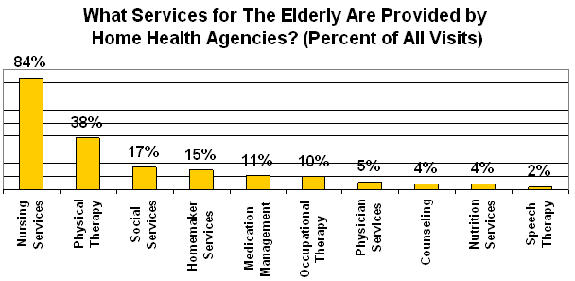
Home healthcare is a large range of healthcare services that can be given up https://zenwriting.net/kadora1fzw/to-find-out-more-or-assistance-about-discovering-a-treatment-facility-call your house for an illness or injury. Home health care is normally more economical, more hassle-free, and simply as effective as care you get in a health center or knowledgeable nursing facility (SNF). Wound take care of pressure sores or a surgical wound Client and caretaker education Intravenous or nutrition treatment Injections Keeping track of major illness and unstable health status In basic, the goal of house health care is to treat a disease or injury.
If you have a Medicare Supplement Insurance (Medigap) policy or other health insurance protection, tell your doctor or other healthcare company so your expenses make money properly. If your physician or referring health care provider decides you require house health care, they should give you a list of agencies that serve your location. They should inform you whether their organization has a monetary interest in any firm noted.
The smart Trick of How To Cite A Treatment Improvement Protocol Trauma-informed Care In Behavioral Health Services That Nobody is Discussing
As soon as your physician refers you for house health services, the house health company will set up an appointment and pertain to your house to speak with you about your requirements and ask you some concerns about your health (how to improve health care services). The house health company staff will likewise talk with your medical professional about your care and keep your medical professional updated about your progress.
Examine what you're eating and drinking. Inspect your high blood pressure, temperature, heart rate, and breathing. Inspect that you're taking your prescription and other drugs and any treatments correctly. Ask if you're having pain. Check your safety in the home. Teach you about your care so you can look after yourself.
A health care service provider is an individual or business that provides a health care service to you. In other words, your healthcare service provider looks after you. The term "health care provider" is sometimes improperly utilized to describe a health insurance coverage plan, however medical insurance is different from health care.
But there are all different kinds of health care providers. Any kind of healthcare service you might need is supplied by some kind of health care supplier. Here are some non-physician examples of health care suppliers: The physiotherapist that helps you to recover from your knee injuryThe house healthcare company that offers your going to nurseThe durable medical devices business that offers your house oxygen or wheelchairYour pharmacyThe laboratory that draws and processes your blood testsThe imaging center that does your mammograms, X-rays, and MRI scansThe speech therapist that works with you to ensure you can swallow food securely after a strokeThe outpatient surgery clinic where you had your colonoscopy doneThe specialized lab that does your DNA testThe immediate care center or walk-in clinic in your community shopping centerThe health center where you get inpatient (or in many cases, outpatient) care In addition to your personal choices about which providers you 'd rather have looking after you, your option of companies matters for monetary and insurance reasons.
These networks are groups of providers that have actually accepted supply services to the health plan's members at a reduced rate and that have actually met the quality requirements required by your insurance provider. Your health plan prefers that you use its in-network suppliers rather than using out-of-network companies. a medical care provider which typically delivers health services. In reality, HMOs and EPOs won't pay for services you obtain from a health care supplier that's out-of-network except in extenuating situations.
However, they incentivize you to get your care from their in-network service providers by charging you a higher deductible, copayment and/or coinsurance when you use an out-of-network service provider. If you like your physician or other healthcare service provider, but they're not in-network with your health strategy, you have options. Throughout your next open enrollment, you can change to a health insurance that includes them in its network.
See This Report on What Is The Purpose Of The Public Health Care Services Division
Your health plan might be going to do this if you're in the middle of a complex treatment routine being administered or handled by this service provider, or if your service provider is the only local option for supplying the treatment you need - who qualifies for home health care services?. Another factor your strategy may enable this is if you can show the strategy why your company is a better choice for this service than an in-network company.
If you can convince your health insurance that utilizing this out-of-network company might save cash in the long run, you might be able to win your appeal. Surprise balance expenses occur in emergency situation circumstances when a patient is treated by out-of-network service providers however had no say in the matter (eg, they were carried by ambulance to the nearest emergency situation department, which wasn't in-network with their insurance coverage plan), or when a client is being dealt with at an in-network center but receives treatment or services from an out-of-network company.
So in addition to having to satisfy your health strategy's in-network out-of-pocket maximum, you might also end up paying out-of-network charges for the knee brace and crutches, walker, or wheelchair that you wind up with after the surgical treatment. The more you know about the series of providers involved in healthcare, the better prepared you can be, a minimum of in non-emergency circumstances.